
Digital cutting for furniture and upholstery
A digital cutter cuts each upholstery part from the pattern file, with the knife that suits the material: fabric from the roll, leather from the hide, foam from the block. The pattern lives in a file, so a new style means a new file — not a new set of cardboard templates.
Upholstery fabric
Woven and knit upholstery fabric feeds from the roll onto a conveyor bed. The conveyor moves the fabric forward as each section is cut, so a marker can be longer than the table.
Two knives do the cutting. The driven rotary tool is built for flexible materials such as textiles. The electric oscillating tool cuts woven fabric and leather.
A plotting pen draws assembly marks, line symbols and part labels on fabric and leather, so parts reach the sewing room already marked.
Cushions and foam
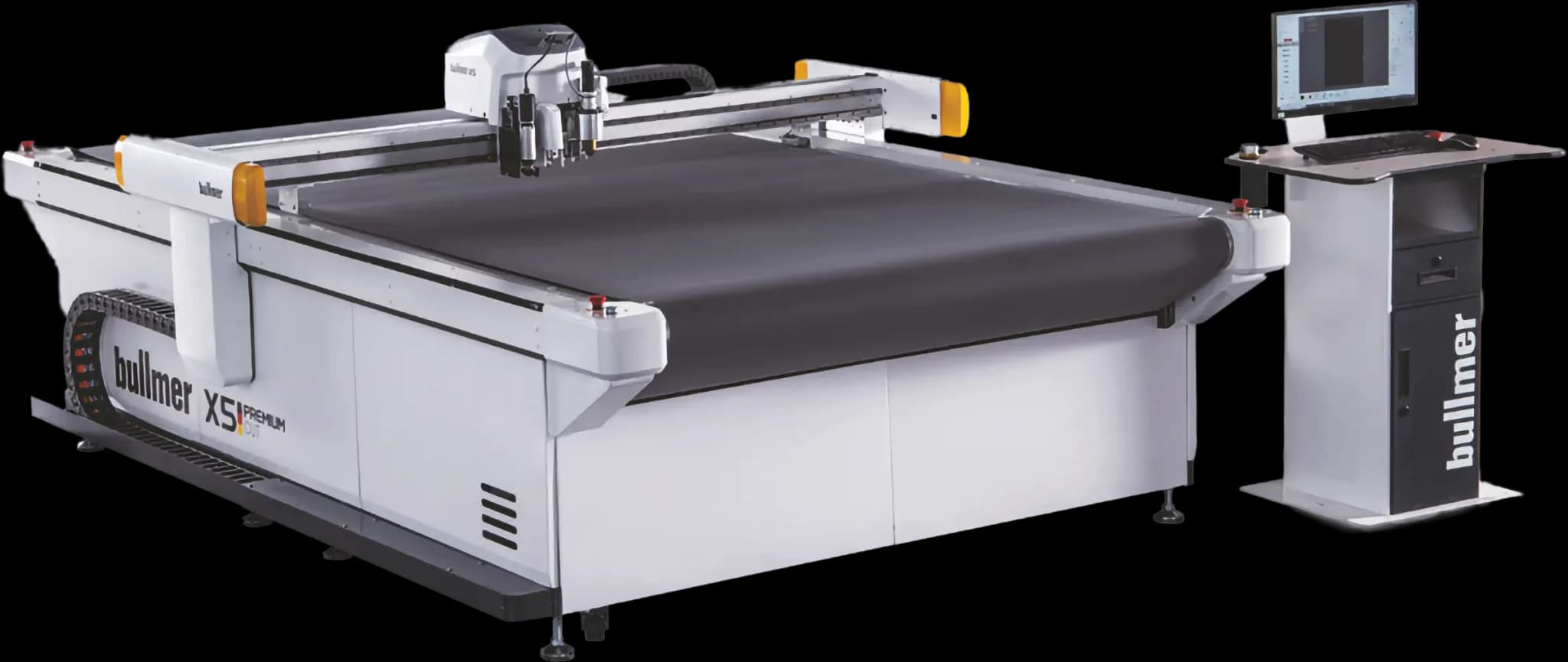
TPS X3 and X7 cut foam up to 1.4 in (35 mm) thick; their universal module takes the knives for rubber, foam, cardboard, textiles and plastics. The BULLMER X5 takes material up to 2 in (50 mm) and carries a pneumatic knife for thick and dense material.
Foam thicker than 2 in (50 mm) is outside what these machines cut.
Leather and PU
Leather and PU are cut with the electric oscillating tool. Hides are irregular, and two X-series options deal with that:
- Top camera — images the whole table to register and cut irregularly shaped or askew material.
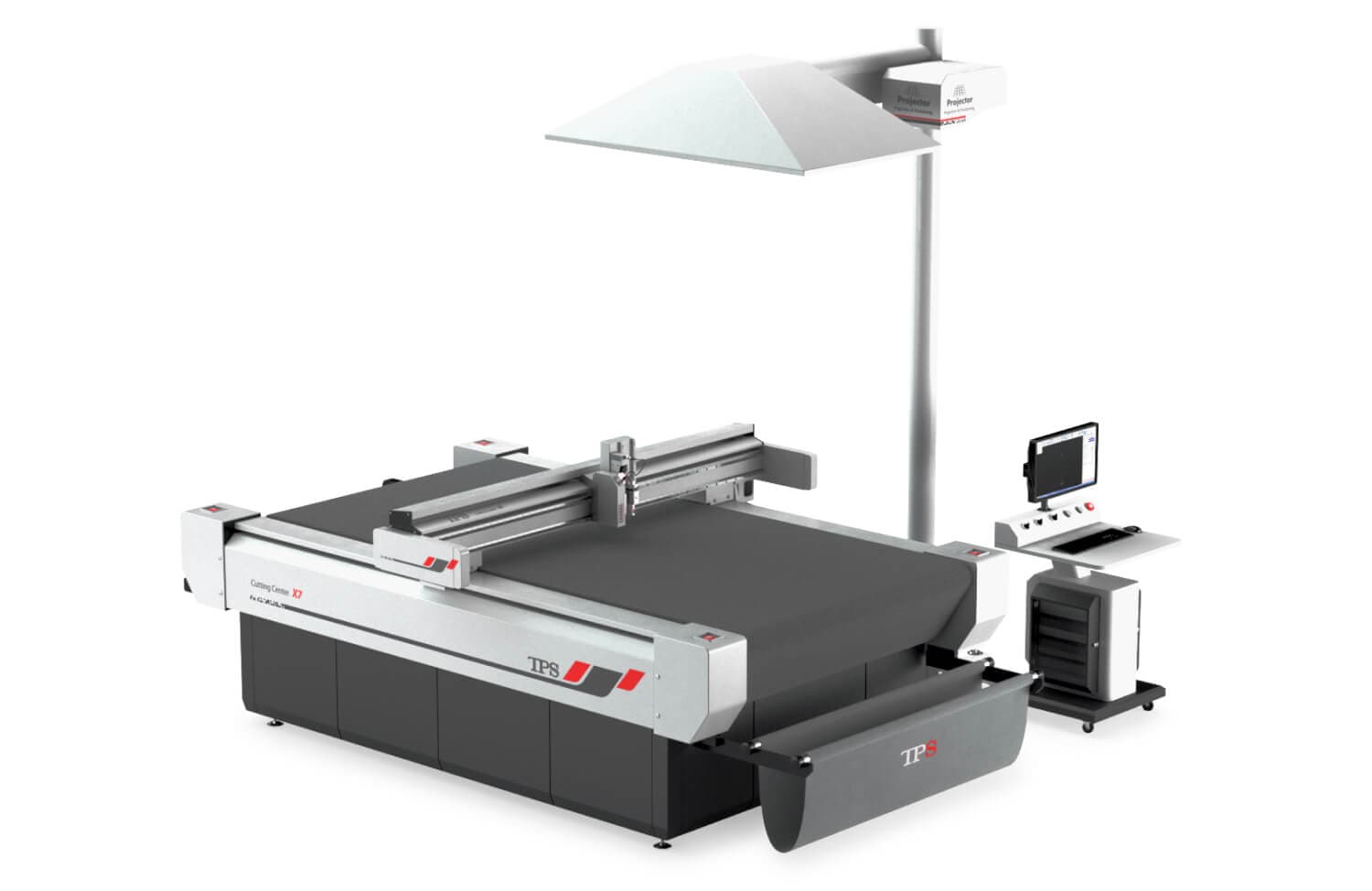
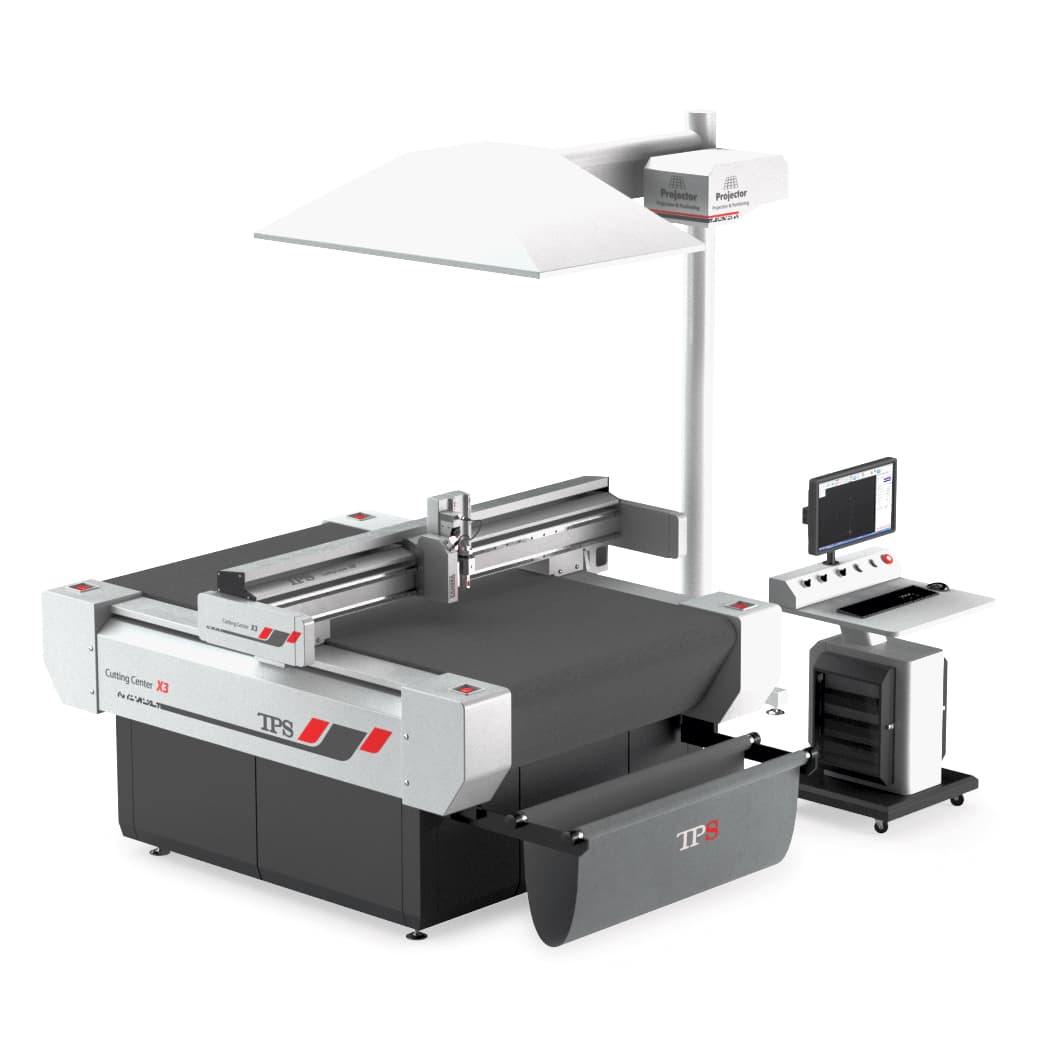
- Projector — projects the cutting pattern onto the table, so the operator sees where to lay the hide.
Which machine fits
| Model | Working area | Max material thickness | How material feeds | Fit |
|---|---|---|---|---|
| BULLMER X5 | 98 × 126 in (2500 × 3200 mm) | 2 in (50 mm) | Conveyor, from the roll | Roll fabric and long parts on the widest bed; the thickest foam. Ships with MarkerPro and Procut software. |
| TPS X7 | 63 × 98 in (1600 × 2500 mm) | 1.4 in (35 mm) | Conveyor | Full-width fabric and large panels. Top camera and projector available. |
| TPS X3 | 51 × 51 in (1300 × 1300 mm) | 1.4 in (35 mm) | Conveyor | Smaller shops, leather and sample work. Top camera and projector available. |
| TPS S2, S2+, S3 | up to 51 × 39 in (1300 × 1000 mm) | 0.4 in (10 mm) | Conveyor | Not for upholstery production: 0.4 in is below the thickness of cushion foam. |
How a job runs
- Import the pattern or marker file.
- Load fabric from the roll, or lay the hide on the table. On the X3 and X7, place it with the top camera or the projector.
- The cutter cuts each part and draws its marks.
- The conveyor advances the material, and the next section comes onto the table.
Instead of shears and templates
Hand cutting works from cardboard templates traced onto the material. A digital cutter works from the file: the template is the file, and changing a style means changing the file.
Questions
Can a digital cutter cut cushion foam, and how thick?
Yes. TPS X3 and X7 cut up to 1.4 in (35 mm). BULLMER X5 cuts up to 2 in (50 mm). Thicker foam is outside these machines.
Drag knife, rotary blade or oscillating knife — which one for fabric?
The drag knife is not motor-driven and through-cuts at high speed. The driven rotary tool is built for textiles. The electric oscillating tool is listed for woven fabric and leather. The X3 and X7 hold up to three universal modules, so more than one knife can be mounted at once.
What bed size do I need?
Compare your largest part with the working areas above. On every model the conveyor moves the roll forward, so a marker can run longer than the table.
Can it mark sewing lines?
Yes. The plotting pen draws assembly marks, line symbols and text on fabric and leather.
Still have questions?
An engineer will answer them — the tooling, the materials, the install.