
Printer relocation and installation
Moving a printer from wherever it is now, installing it on your floor, and starting it into production on LIPLA ink.
A used flatbed at a third of the price is a good deal or an expensive mistake, and the difference is not visible in the listing. Most of the machines we move were bought somewhere else — from a shop that closed, from a seller two states away, from a plant that replaced them. Getting one of those printing is not one job. It is five, and we do all five.
What we do
- Preservation for transport. The ink system is drained and flushed, moving parts are secured, and the machine is crated. A printer shipped with ink still in the lines arrives as a different machine.
- Rigging and freight.Out of the seller’s building, along the road, and into yours — including the route from your door to the spot it will stand on.
- Installation. Positioning, assembly, leveling, and connection to power, compressed air, and extraction.
- Commissioning on LIPLA. The system is filled with our ink, the printheads are aligned and calibrated, presets are built for your materials, and the machine is run on your own jobs until the numbers hold.
- Operator training. On your machine and on your work, while we are still in the building.
Why we start it on our ink
Because of what we are willing to promise. A machine that has been through somebody else’s shop arrives with a history nobody wrote down. We can say it prints, at quality, on agreed materials, only if we know what is in the lines and put it there ourselves.
That is the same guarantee described on ink conversion, and it is why the job is not sold in pieces.
A used machine is a low price and an unknown. What makes it a good decision is what it costs to run afterward — and that is the liter.
From printing to printing your work
An installed machine prints a test file. It does not yet print your work, on your materials, at the speed you costed the job at. Closing that gap is what decides when the machine starts paying for itself.
- Your materials, run and measured — not the samples that came with the machine
- Media presets per substrate: height, vacuum zones, passes, cure settings
- RIP workflow: hot folders, nesting, cut paths, whatever your files need
- Real jobs run by your operators, at rate, while we are still in the building
Color profiles
A printer, an ink and a substrate make one color response. Change any of the three and the profile that matched the old combination no longer does.
We build profiles for the combinations you actually sell, integrate them into your RIP — Caldera Grand RIP and ONYX — and check them on real work before we leave.
There is no file to download. A profile that did not come off your hardware is a profile for somebody else’s machine.
Bulk ink supply
At volume it is worth running canisters instead of one-liter cartridges, and we install them on the same visit.
- A liter from a canister costs less than a liter from a cartridge
- Level monitoring warns before a channel runs dry and takes a printhead with it
- Production does not stop to change a cartridge mid-run
- Tanks from 5 to 20 liters per channel, quick-connect fittings, every LIPLA line
Whether a machine takes one is decided by its ink system, not by us. We say which it is before anything is ordered.
What you have at the end
- Presets and profiles saved on the machine and backed up
- Operators who have run the work themselves rather than watched it
- An honest figure for what the machine produces per shift on your jobs
Tell us about the machine
Five answers and we can say what moving and starting it involves. Everything else we will ask once we are talking.
Case Studies
Real work, documented with the machine, the site, the challenge and how we solved it.
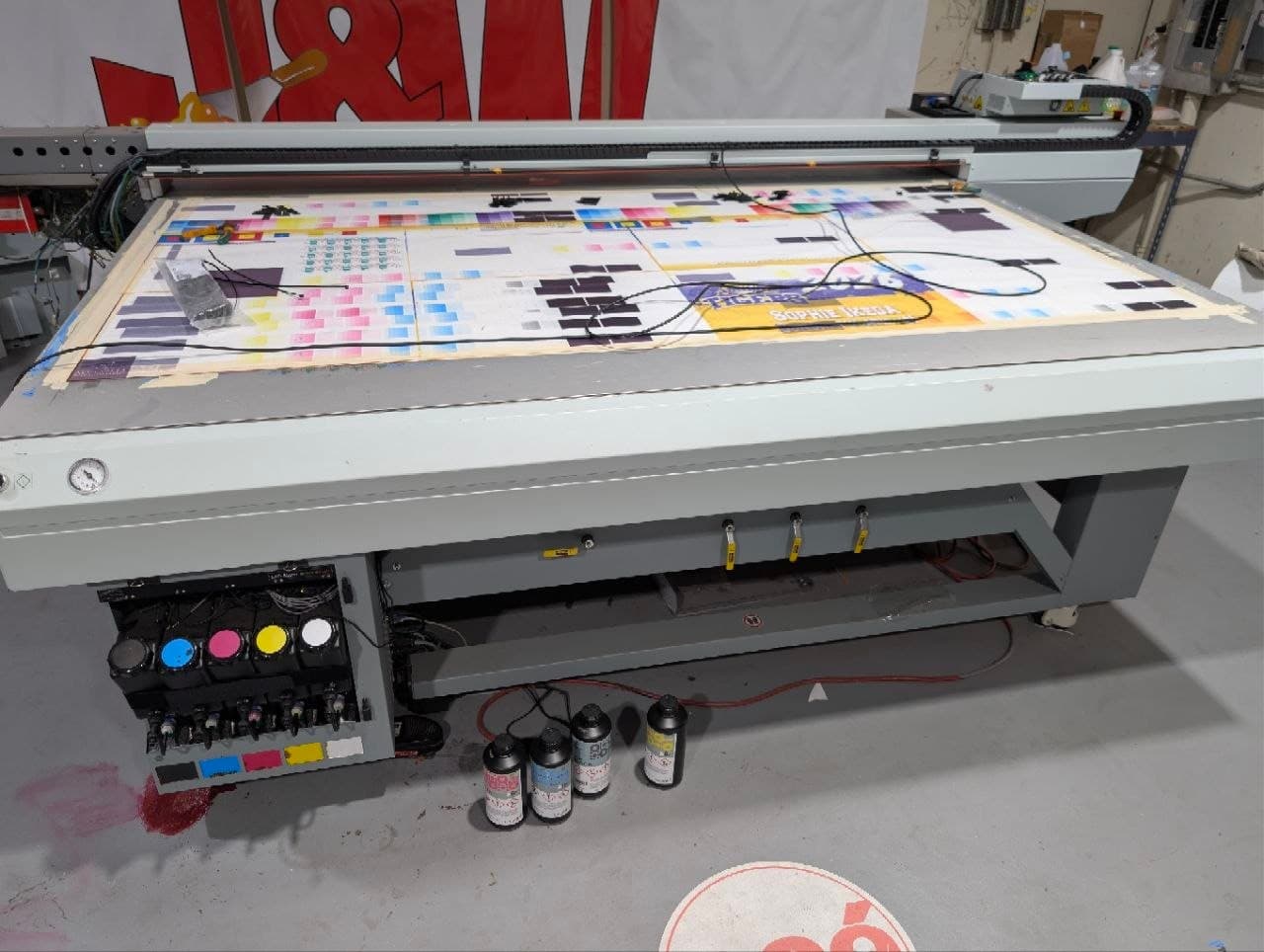
Océ Arizona 365: control board replaced, ink converted to Lipla
The printer would not run and would not initialize. A printhead control board replaced it, the heads were flushed and dried while the machine was open, and the ink system was converted from OEM to Lipla in the same visit.
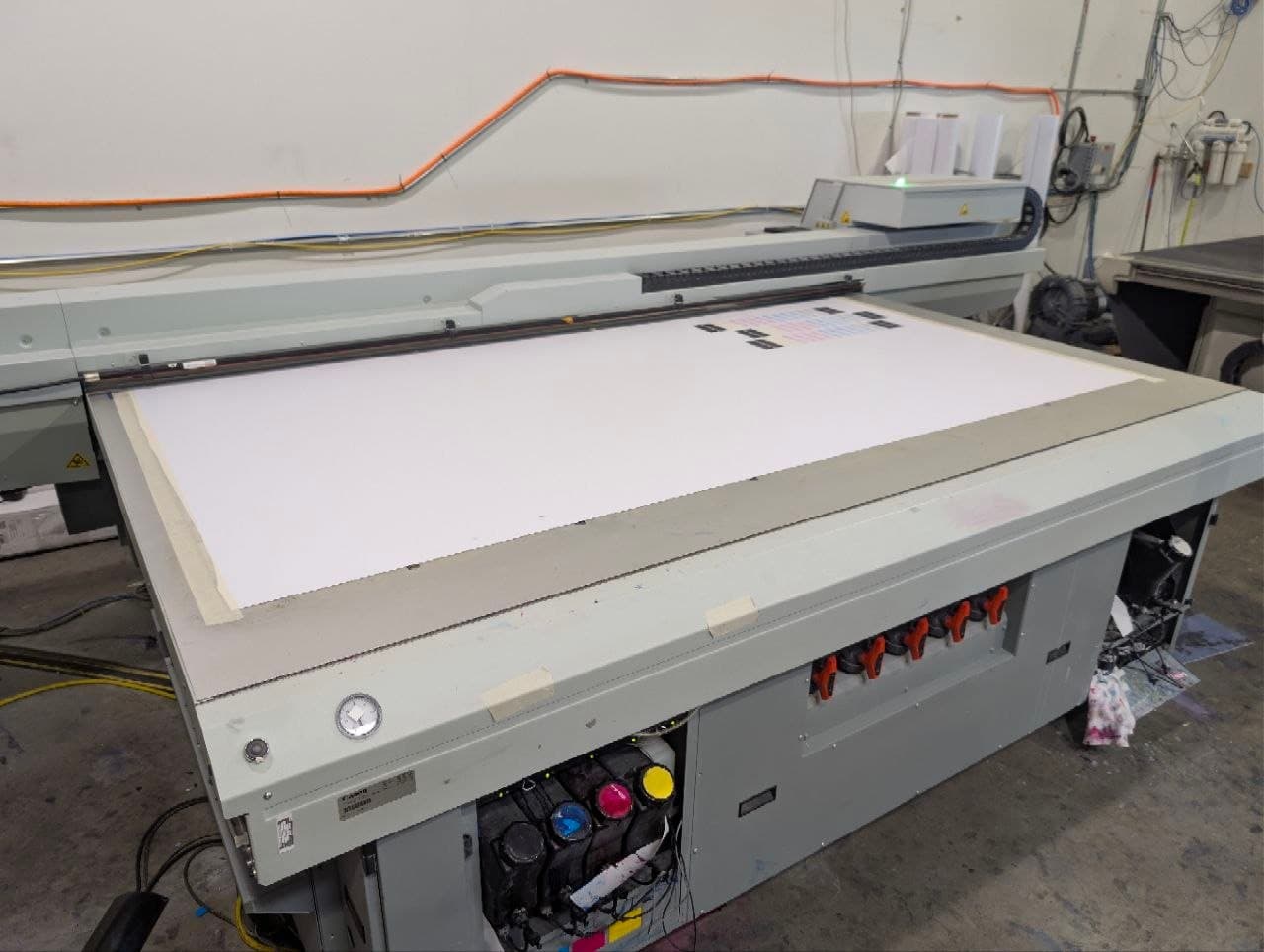
Two Océ Arizonas: a leaking white channel and a bed that missed the ruler
A 2280 that dripped white ink from its heads overnight, and a 360 next to it with air in the white filters. Wrong air filters, a clogged head segment, split coolant hoses and registration pins that had drifted off the ruler.
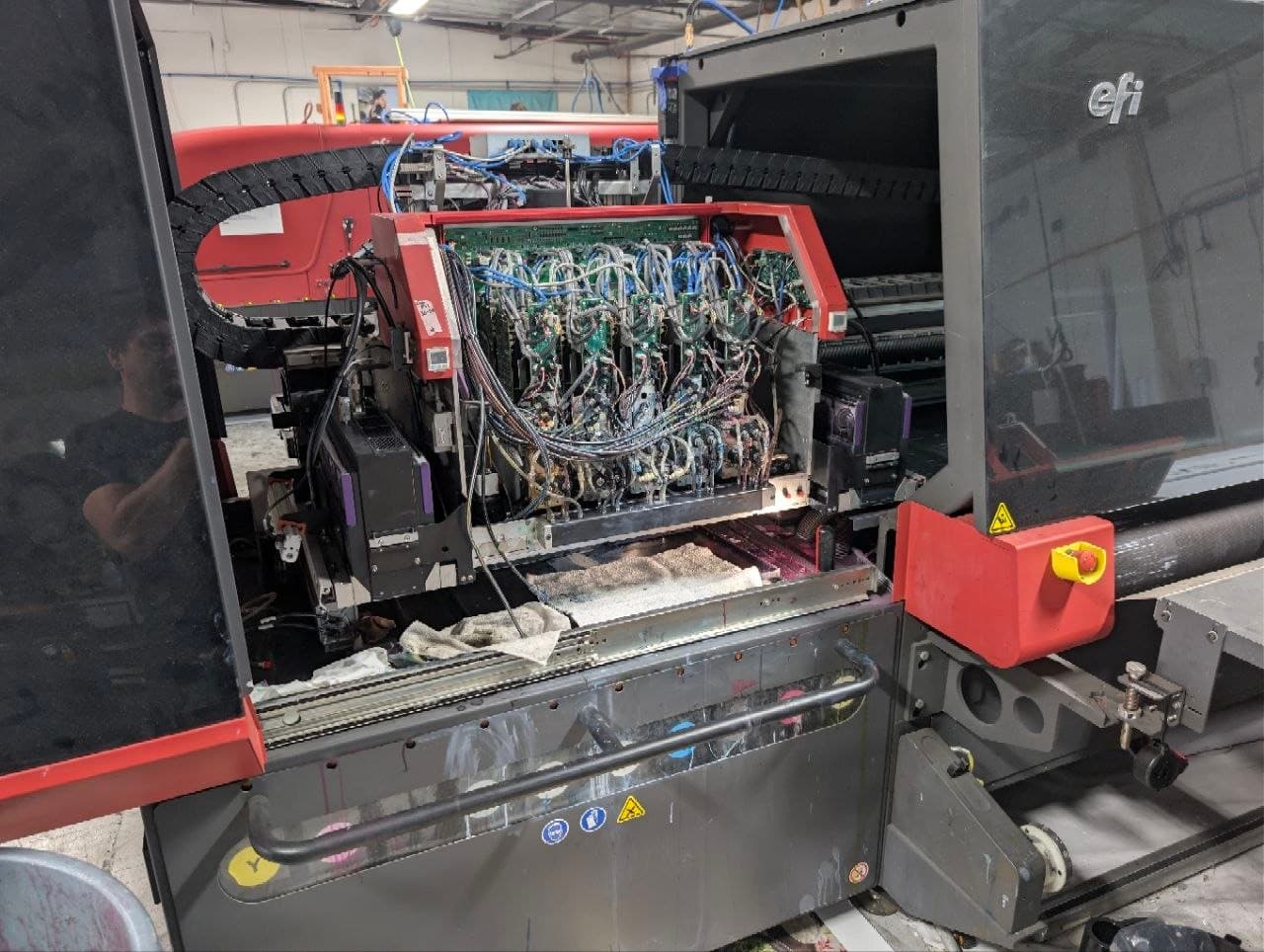
A loose screw shorted four printhead boards on a VUTEk H5
The printer stopped part-way through initialization and put a system error on the panel. The cause was a screw loose inside the carriage, lying across the printhead control boards. One board is back in service; three are on the bench.

Move your printer onto LIPLA and the engineers come with it
Print quality we stand behind on agreed materials, and the people who keep it there. Both last as long as the machine runs on ours.
- A direct line to the engineer
- Telegram, not a ticket system. The person who answers is the one who knows your machine.
- An answer within 24 hours
- No case number, no dealer authorization, no waiting on an OEM to approve a visit.
- Special terms on engineer time
- Installation, production launch and repair are done on contract terms rather than sold to you as jobs.
- Your machine’s history, held here
- What was installed, what was converted, what was serviced and when. That history is usually what makes the second call shorter than the first.