
Packaging samples and short runs, without dies
A steel-rule die is made for one design. A digital cutter reads the design file, so a new box style means a new file, not a new die. It cuts and creases corrugated and carton board for samples, prototypes and short runs.
Printed packaging and realistic prototypes
A sample printed with the real artwork shows the customer the finished box, not a plain white board. Print the board on a UV flatbed, then cut and crease it on the cutter. The CCD camera on every TPS model reads the printed registration marks, so the cut follows the print.
JHF F3900 and F5900 flatbeds and the JHF M3300 hybrid print on paper and board.
Corrugated and carton samples
- Creasing wheel — creases corrugated and non-corrugated cardboard, some corrugated plastics, foam board and thin plastics.
- Electric oscillating tool — cuts corrugated board.
- Drag knife — through-cuts at high speed.
- V-cut tool — cuts the grooves that fold foamcore and sandwich board into structures.
- Tape applicator — lays adhesive tape on cardboard, paper or film during the job.
- Perforating tool — adds tear lines and perforations in cardboard, vinyl and synthetic sheet. X3 and X7 only.
Foam inserts
Inserts are cut to the shape of the product. S-series cutters take foam up to 0.4 in (10 mm). For thicker inserts, the X3 and X7 cut up to 1.4 in (35 mm). Deeper foam is outside our range.
Which machine fits
| Model | Working area | Max material thickness | Fit |
|---|---|---|---|
| TPS S2 | 16 × 24 in (400 × 600 mm) | 0.4 in (10 mm) | Samples next to the press. Sheets are lifted and separated automatically, cut, and carried out to a collection point. |
| TPS S2+ | 24 × 35 in (600 × 900 mm) | 0.4 in (10 mm) | Larger samples. Optional roll loading. |
| TPS S3 | 51 × 39 in (1300 × 1000 mm) | under 0.4 in (10 mm) | Full sheets in one pass. Optional sheet feeding table for continuous runs of rigid sheet. |
| TPS X3 | 51 × 51 in (1300 × 1300 mm) | 1.4 in (35 mm) | Thicker inserts, perforation, and a router module for rigid board. |
| TPS X7 | 63 × 98 in (1600 × 2500 mm) | 1.4 in (35 mm) | Large display boxes and POP pieces; takes a full 4 × 8 ft board. |
All five have a conveyor bed and a CCD camera for printed sheets.
TPS S2
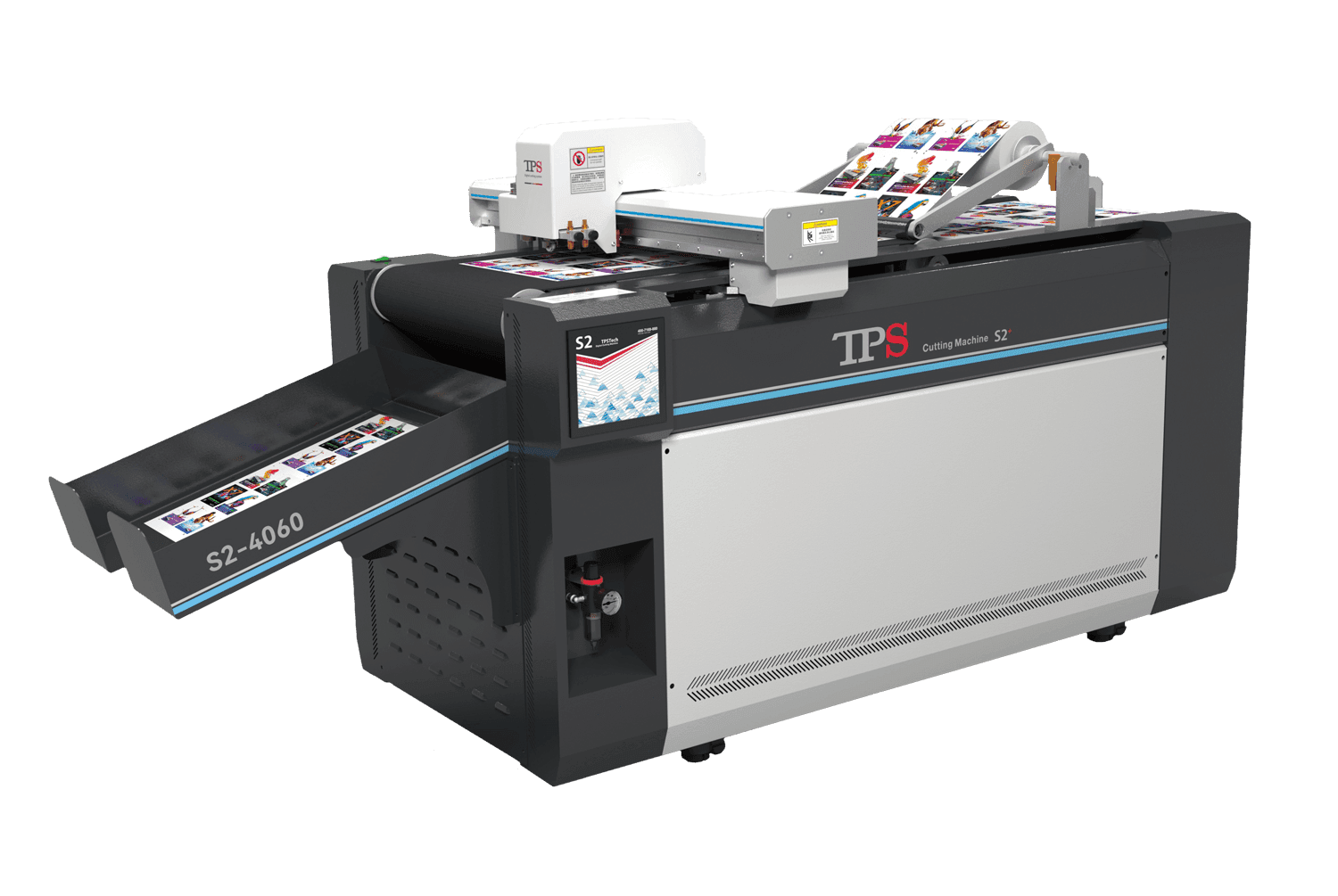
- Working area
- 16 × 24 in (400 × 600 mm)
From $19,640
or from $407/mo
TPS S2+
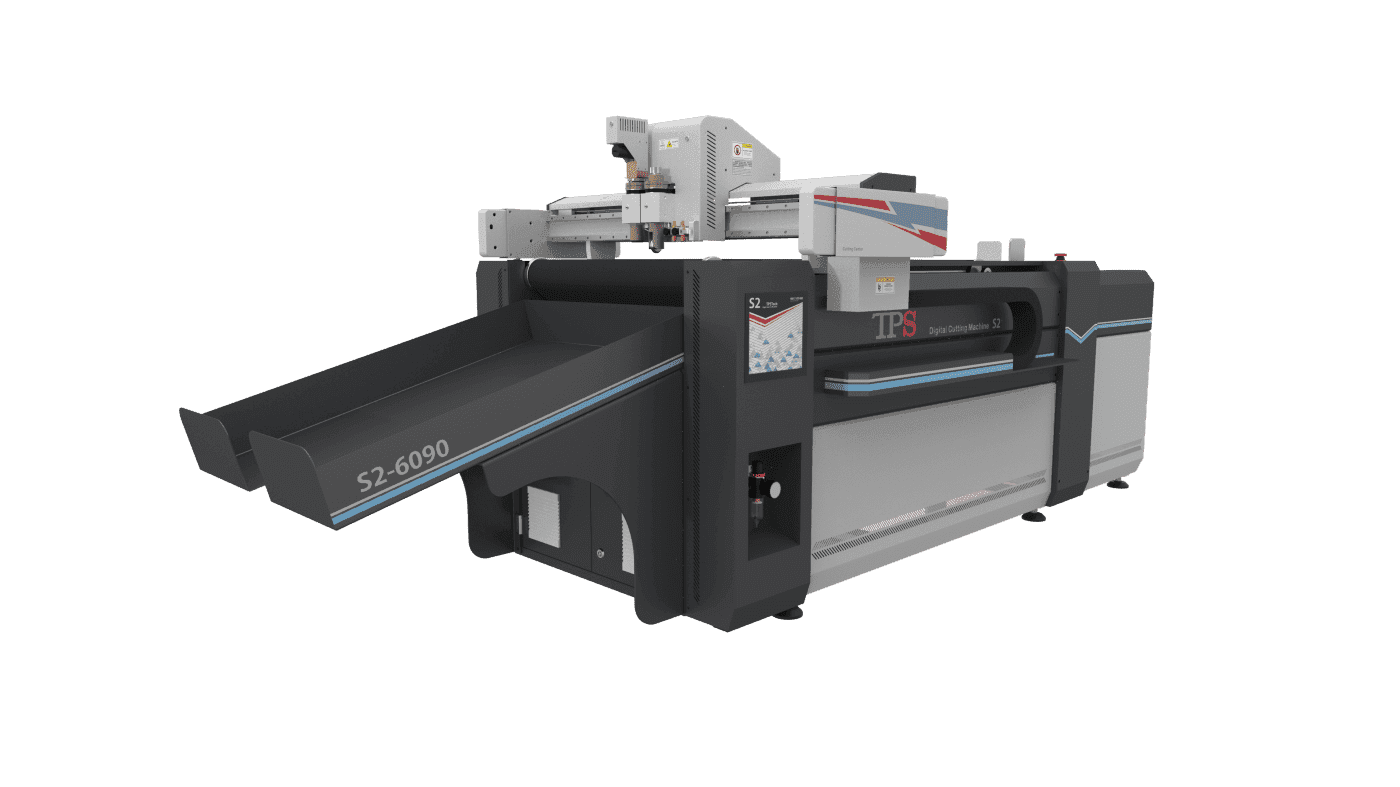
- Working area
- 24 × 35 in (600 × 900 mm)
From $25,760
or from $534/mo
TPS S3
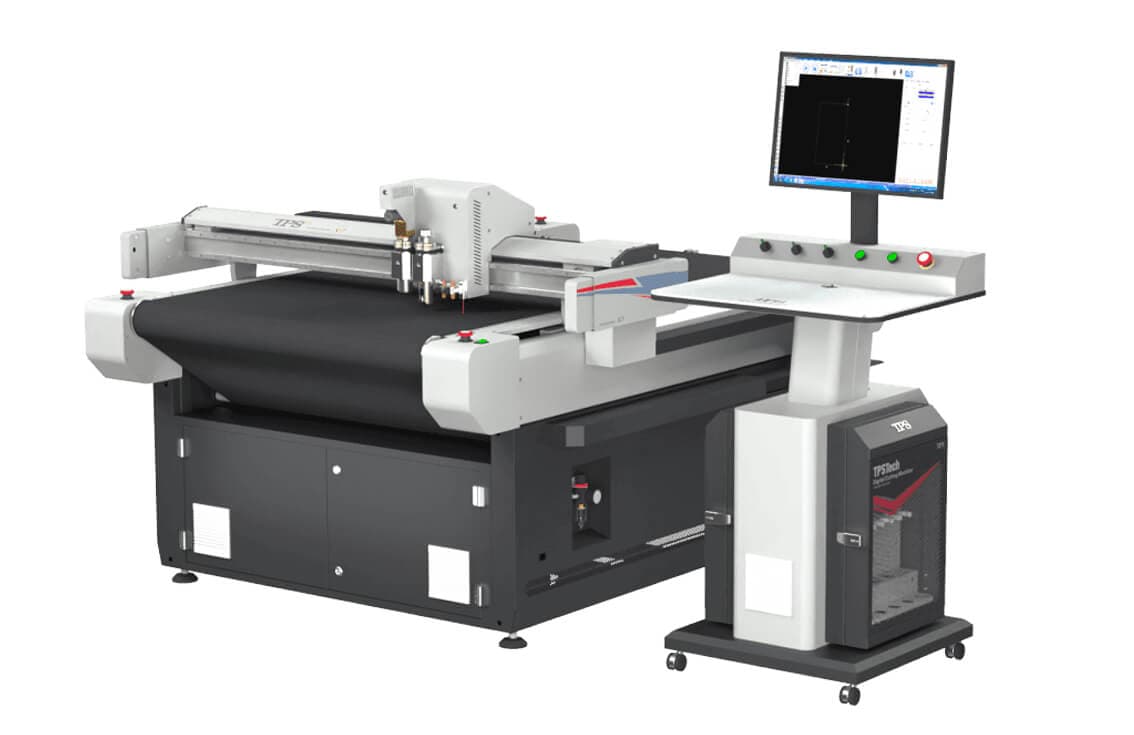
- Working area
- 51 × 39 in (1300 × 1000 mm)
From $32,623
or from $677/mo
TPS X3
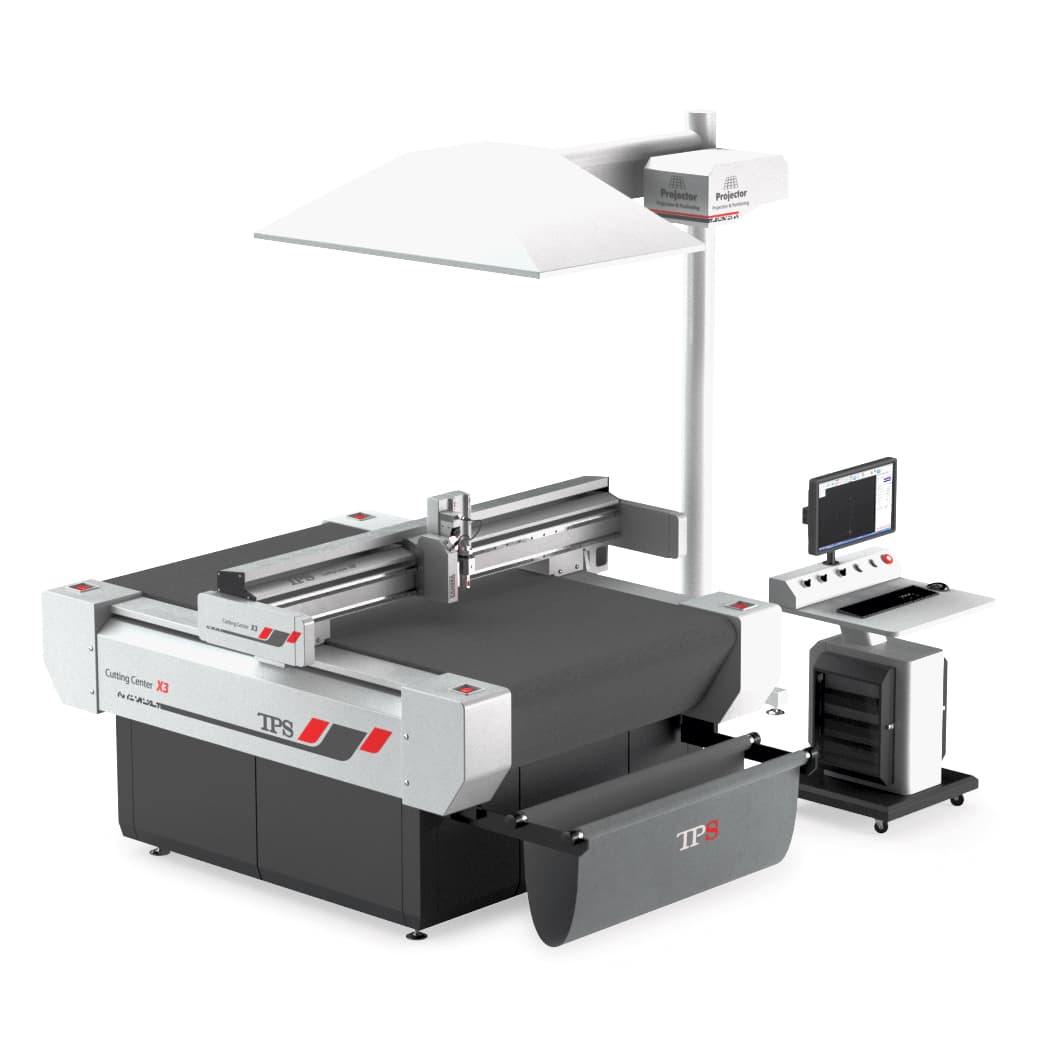
- Working area
- 51 × 51 in (1300 × 1300 mm)
From $30,768
or from $638/mo
TPS X7
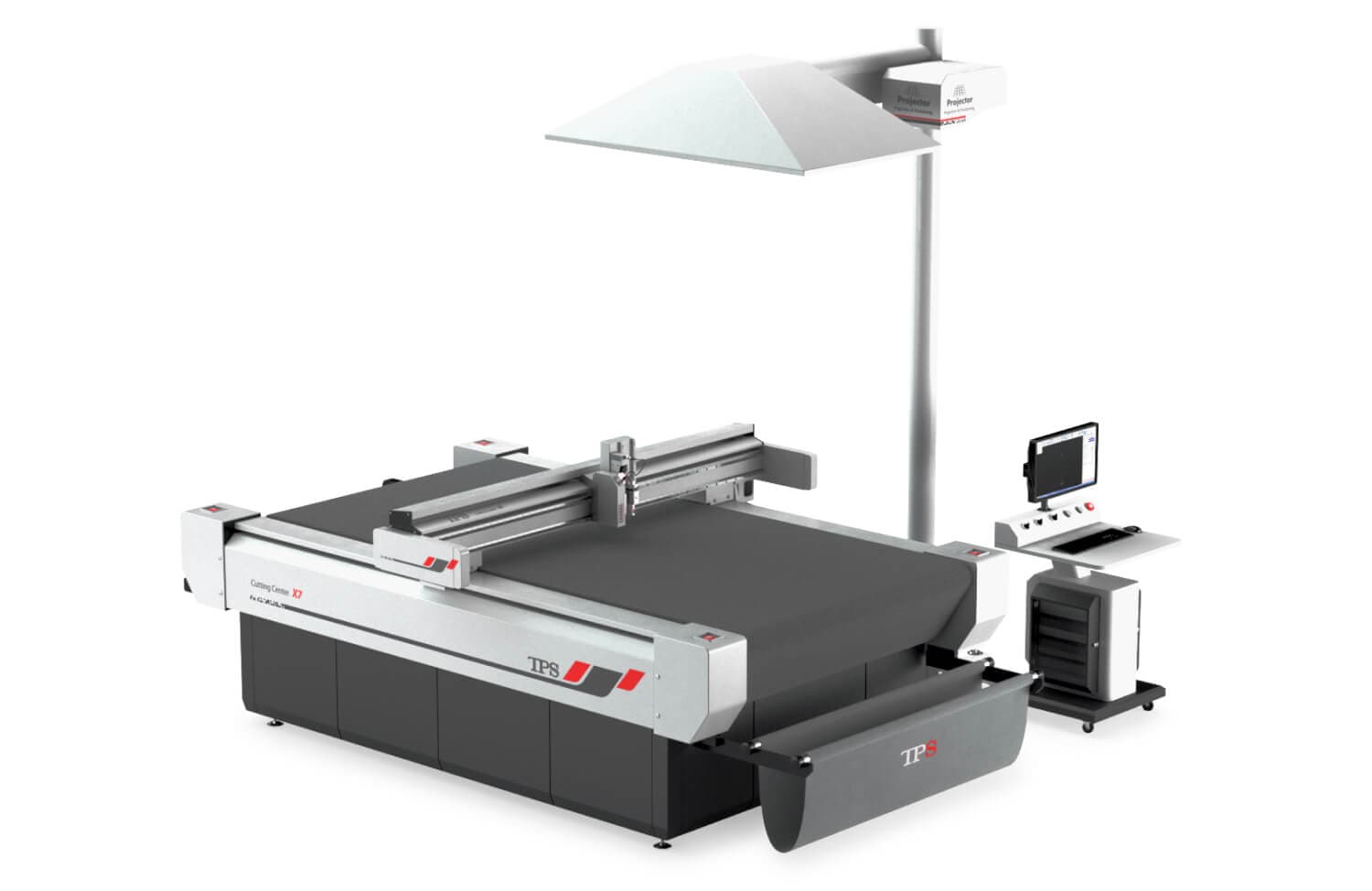
- Working area
- 63 × 98 in (1600 × 2500 mm)
From $32,623
or from $677/mo
How a job runs
- Open the structural design file.
- Load the sheet. The S2 separates and feeds sheets by itself; the S3 can take the sheet feeding table.
- On printed board, the camera finds the registration marks.
- The cutter cuts, creases and, on the X3 and X7, perforates.
- Fold the blank into the box.
Instead of a die
For samples, prototypes and short runs, the file does the die’s job: there is no die to order, store, or remake when the design changes.
Questions
What is digital die cutting?
Cutting and creasing a blank from a design file, with knives and creasing wheels instead of a steel-rule die.
Can a digital cutter crease corrugated board?
Yes. The creasing wheel creases corrugated and non-corrugated cardboard.
How big a sample can each machine cut?
From 16 × 24 in on the S2 to 63 × 98 in on the X7 — see the table above.
Can it apply tape?
Yes. The tape applicator lays adhesive tape on cardboard, paper or film during the cutting job.
Materials: Foam board, foamcore and sandwich board · Foam (packaging inserts) · Corrugated board and cardboard
Still have questions?
An engineer will answer them — the tooling, the materials, the install.