
Cutting gaskets, composites and technical textiles
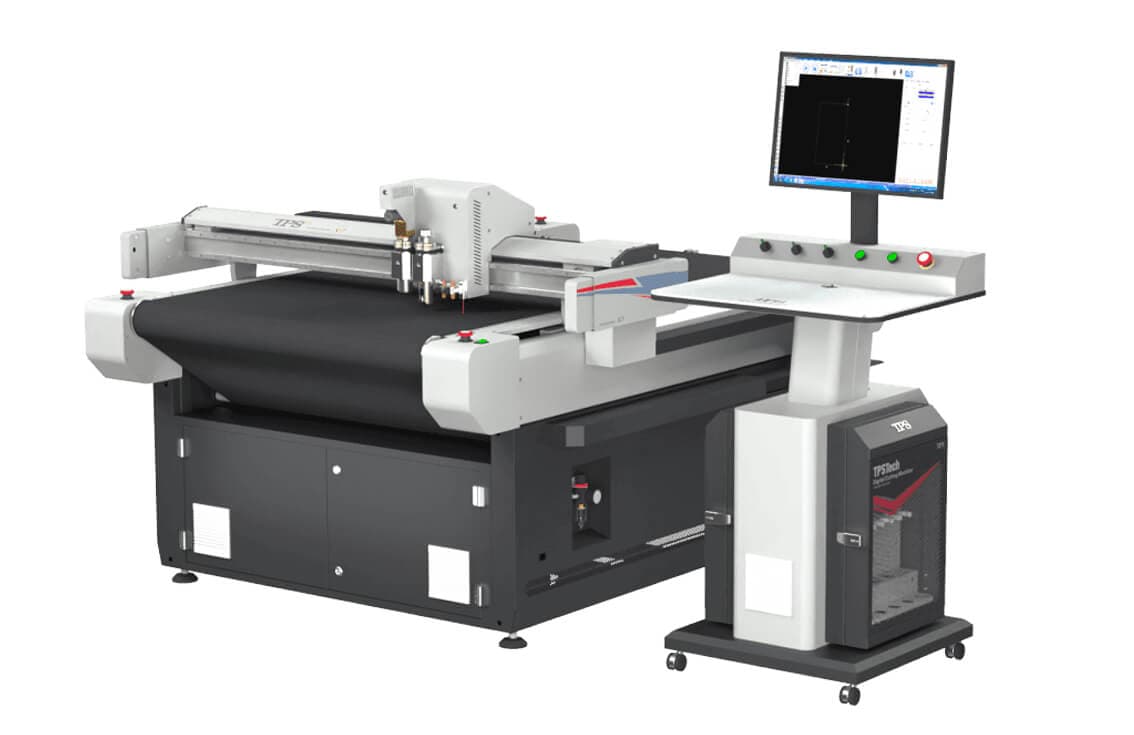
Gaskets, composite plies and technical textiles are cut to a drawing, from sheet or roll. A digital cutter cuts each part from the file with a knife — no dies, no heat — and can mark it on the same table.
“No heat” is literal: these are knife and blade tools, not a laser.
Gaskets and seals
Rubber and dense gasket sheet are cut with the pneumatic oscillating tool, made for tough, dense materials. The plotting pen marks rubber and Teflon (PTFE) with part numbers, symbols or text.
Composites
The driven rotary tool cuts carbon fabric, glass fabric and other textiles. The electric oscillating tool is listed for composite material. The BULLMER X5’s manufacturer sells it for cutting textiles, composites and fabrics.
Felt and technical textiles
Felt and technical textiles are cut with the driven rotary tool, which is built for flexible materials, from the roll on a conveyor bed.
Which machine fits
| Model | Working area | Max material thickness | Fit |
|---|---|---|---|
| TPS X3 | 51 × 51 in (1300 × 1300 mm) | 1.4 in (35 mm) | Production of gaskets and composite plies. |
| TPS X7 | 63 × 98 in (1600 × 2500 mm) | 1.4 in (35 mm) | Large sheets and long parts from the roll. |
| BULLMER X5 | 98 × 126 in (2500 × 3200 mm) | 2 in (50 mm) | The thickest and densest sheet; roll goods; pneumatic knife. |
| TPS S2+, S3 | 24 × 35 in and 51 × 39 in | 0.4 in (10 mm) | Thin gaskets and prototypes. Both carry the rotary and pneumatic oscillating tools. |
The S2 is not listed: it has neither the driven rotary tool nor the pneumatic oscillating tool.
TPS X3
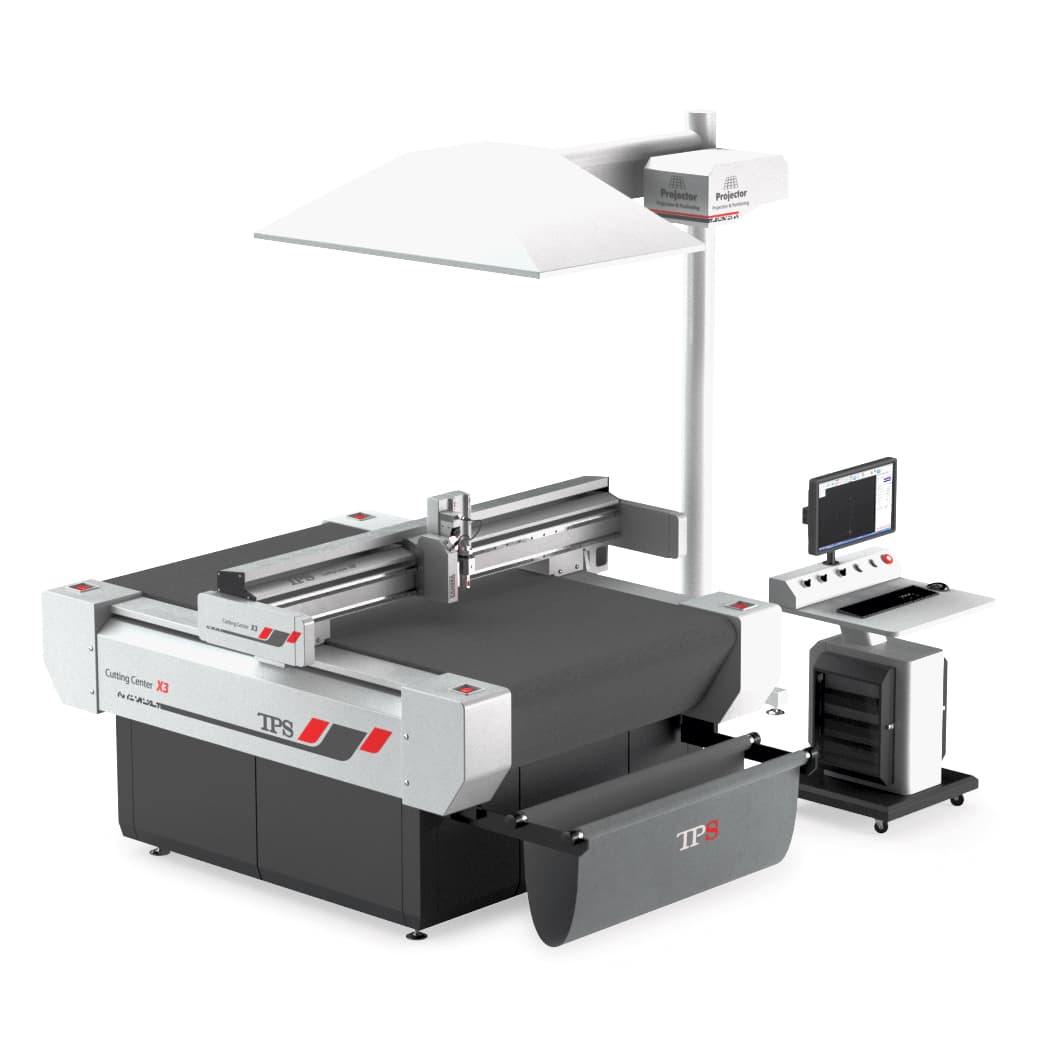
- Working area
- 51 × 51 in (1300 × 1300 mm)
From $30,768
or from $638/mo
TPS X7
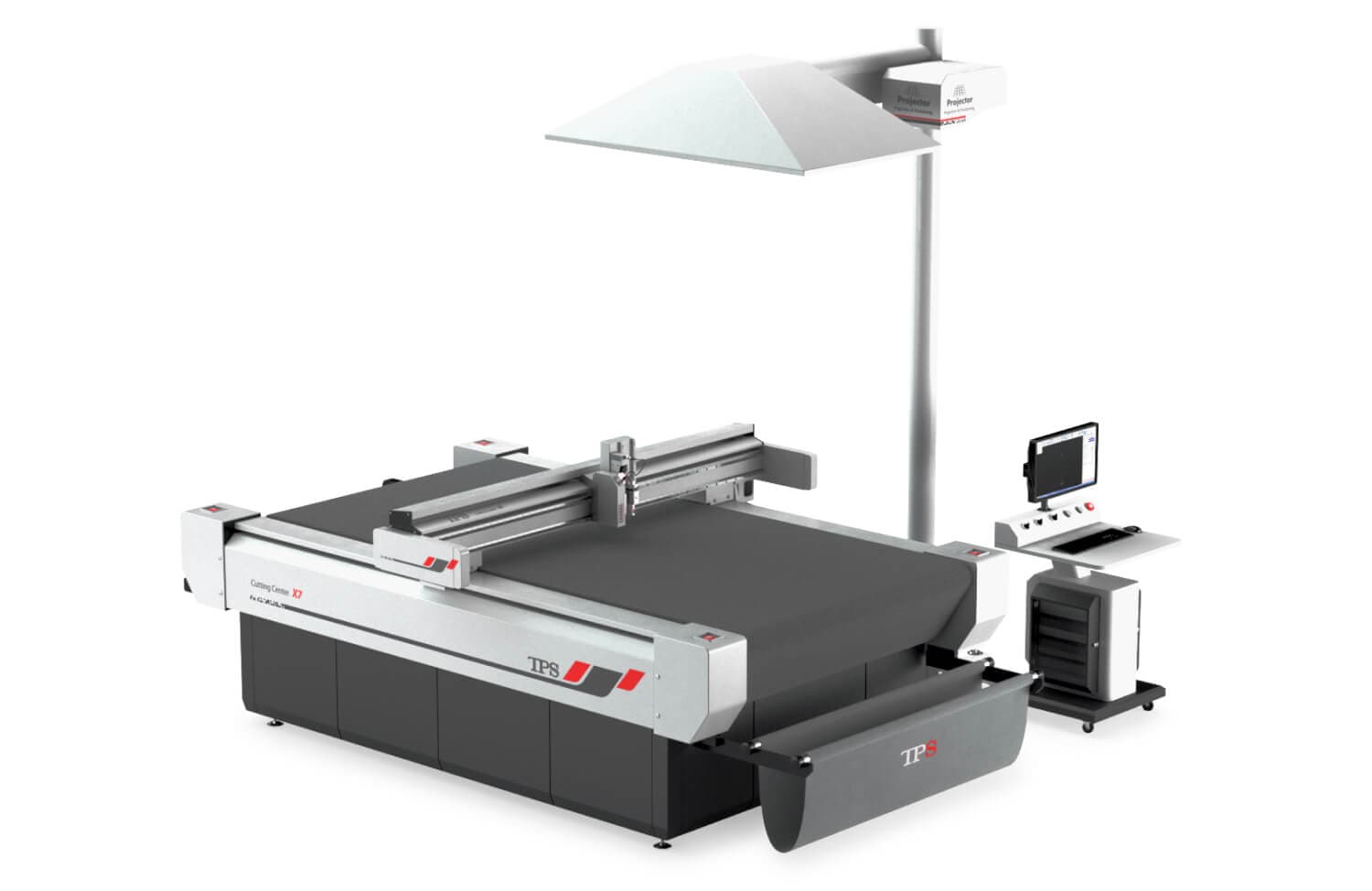
- Working area
- 63 × 98 in (1600 × 2500 mm)
From $32,623
or from $677/mo
BULLMER X5
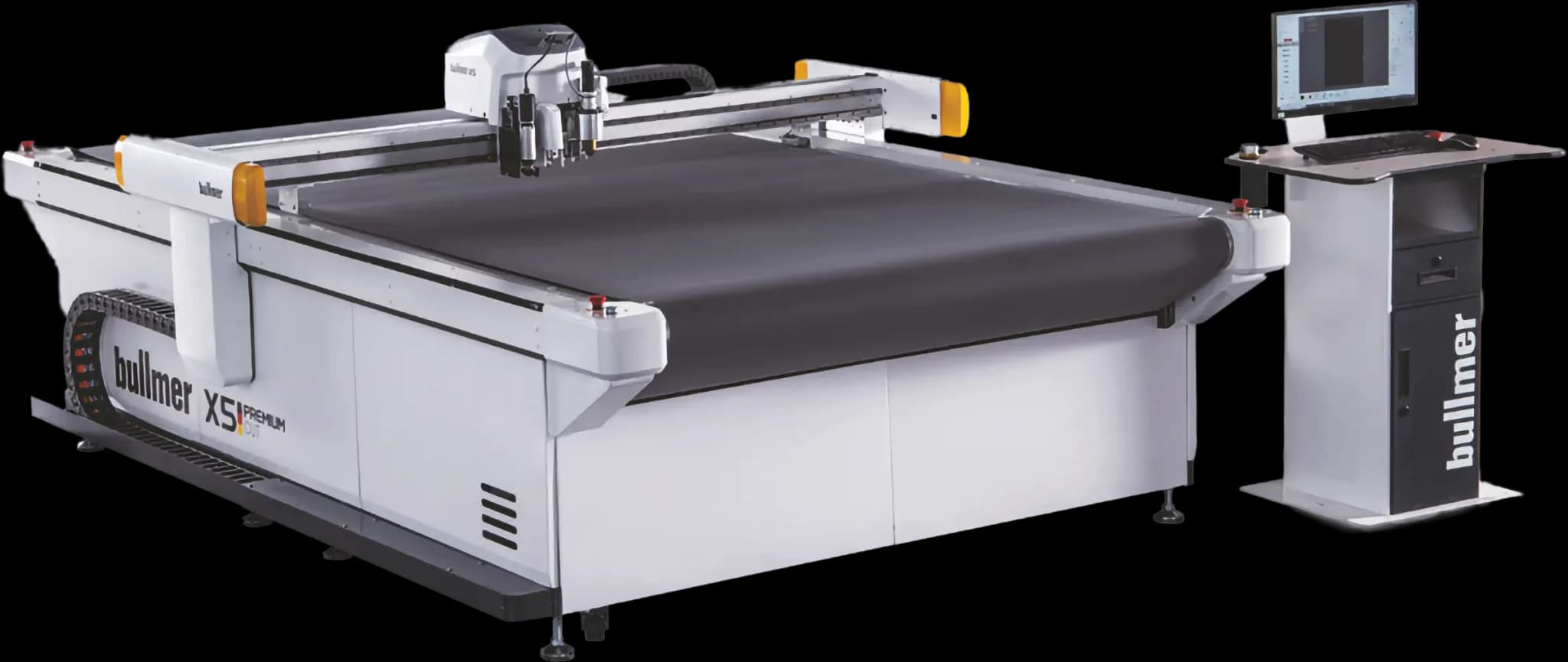
- Working area
- 98 × 126 in (2500 × 3200 mm)
From $78,063
or from $1,620/mo
TPS S2+
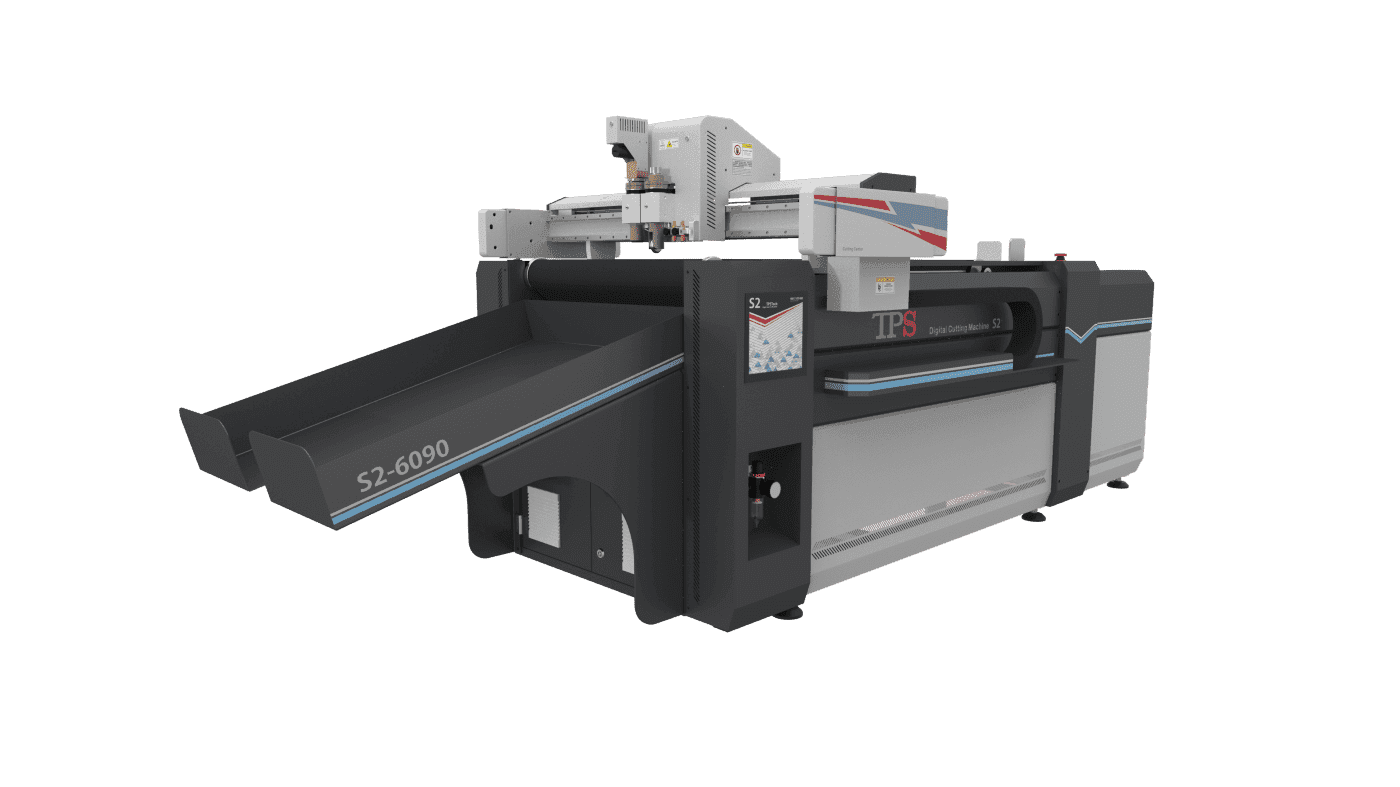
- Working area
- 24 × 35 in (600 × 900 mm)
From $25,760
or from $534/mo
TPS S3
- Working area
- 51 × 39 in (1300 × 1000 mm)
From $32,623
or from $677/mo
How a job runs
- Import the part drawing.
- Load sheet on the table or roll on the conveyor.
- The cutter cuts each part and, with the plotting pen, marks it.
- The conveyor advances the material for the next section.
Questions
Can a knife cutter cut carbon fiber?
The driven rotary tool cuts carbon and glass fabric.
How thick a gasket can it cut?
Up to 1.4 in (35 mm) on the TPS X3 and X7, 2 in (50 mm) on the BULLMER X5, and 0.4 in (10 mm) on the S2+ and S3.
Can it mark part numbers on PTFE?
Yes. The plotting pen marks rubber and Teflon (PTFE).
Materials: Textile · Carbon and glass fabric · Composite material
Still have questions?
An engineer will answer them — the tooling, the materials, the install.