
Printing directly on glass and mirror
A UV flatbed prints straight onto glass and mirror: the ink cures on the surface under UV light, with no film to laminate and no transfer.
What printed glass is used for
- Doors and partitions
- Kitchen splashbacks and cabinet fronts
- Shower panels
- Glass signs and displays
- Tabletops
Which machine
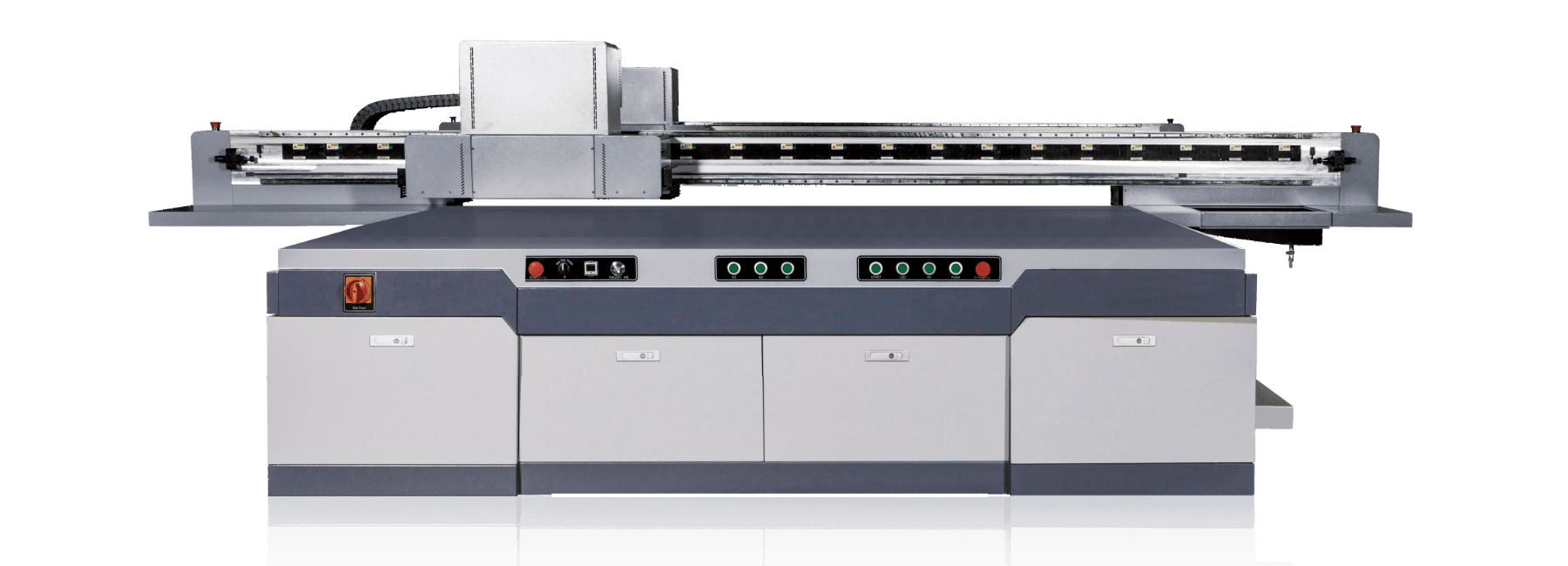
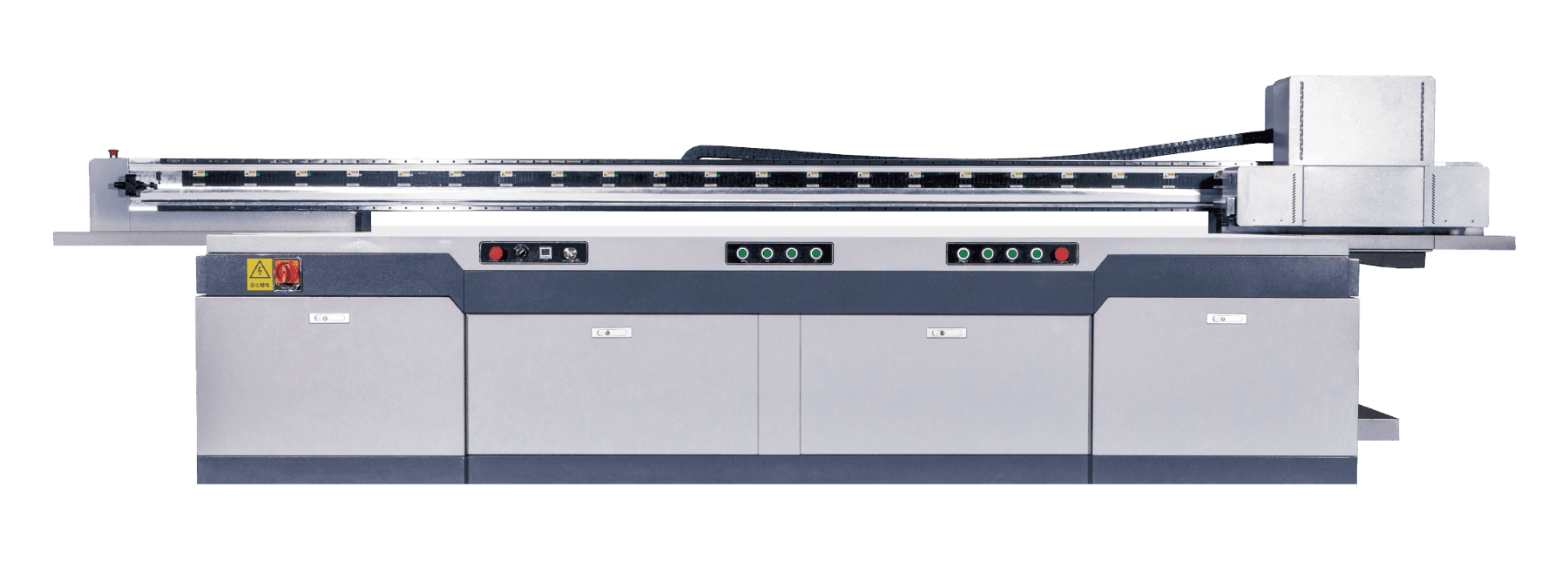
Glass is printed on the flatbeds. The hybrid and roll-to-roll printers do not take it.
| Model | Print area | Max thickness | Inks |
|---|---|---|---|
| JHF F3900 | 98 × 51 in (2500 × 1300 mm) | 4.7 in (120 mm) | CMYK, Lc, Lm, white, varnish |
| JHF F5900 | 126 × 79 in (3200 × 2000 mm) | 4.7 in (120 mm) | CMYK, Lc, Lm, white, varnish |
The white channel prints under the color, so the image reads on clear glass; the varnish channel adds a clear layer over it.
Primer
Glass is one of the materials LIPLA Primer is made for. The printer jets the primer only under the printed image; drying time is 3–5 minutes, and UV curing is required.
Ink
JHF flatbeds run LIPLA KYO.
Questions
What printer prints on glass?
A UV flatbed: the glass lies flat on the bed and the carriage prints over it. Ours are the JHF F3900 and F5900.
Do I need a primer to print on glass?
LIPLA Primer is made for glass, and the printer jets it only where the image goes.
How thick can the glass be?
Up to 4.7 in (120 mm) on both flatbeds.
Can I print on mirror?
Yes. Glass and mirror are on the flatbeds’ material list.
Materials: Glass and mirror
Still have questions?
An engineer will answer them — the configuration, the materials, the install.