
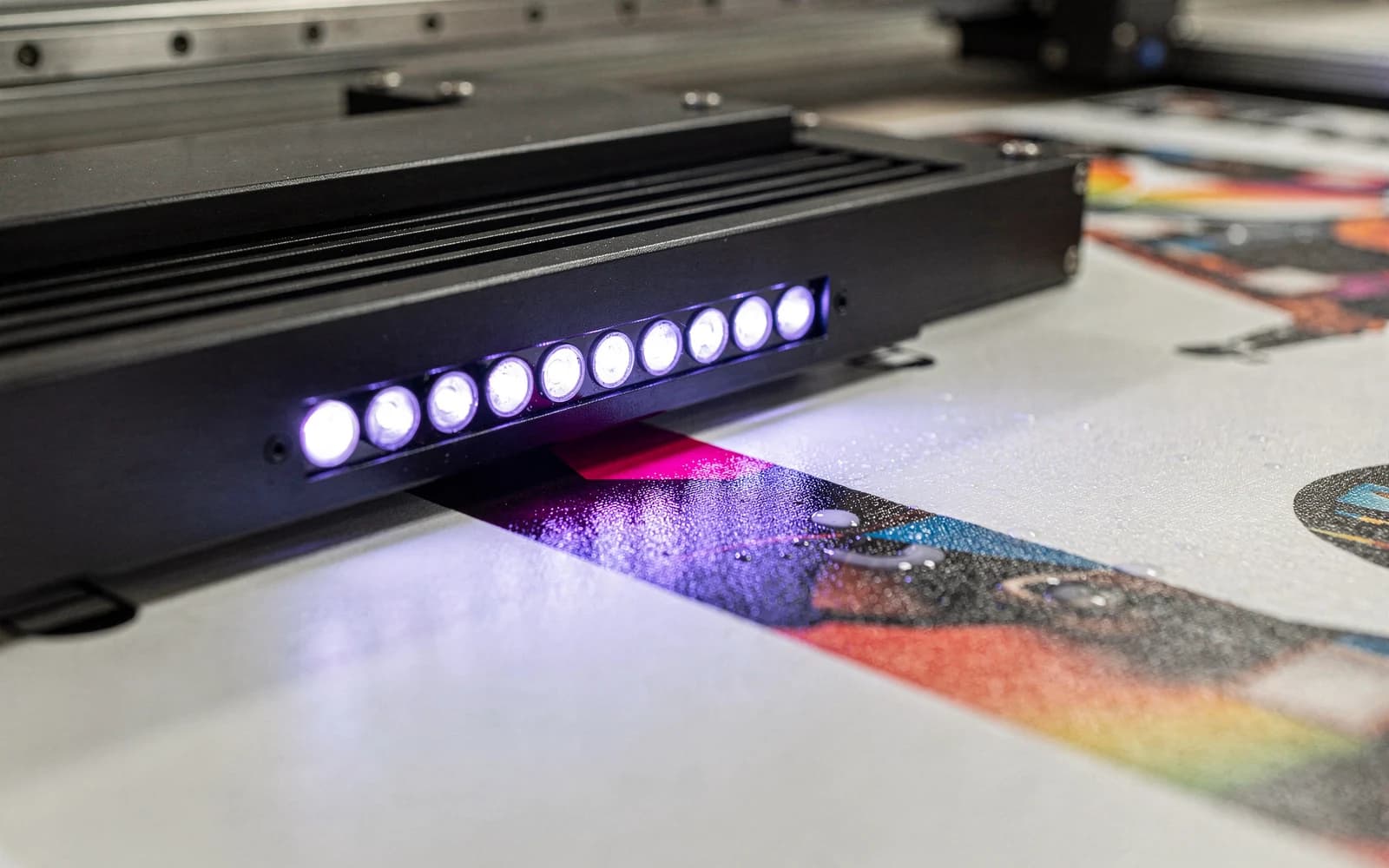
UV curing technology has evolved dramatically over the past decade. If you're evaluating a new flatbed printer, understanding the difference between UV-LED and traditional UV mercury systems can save you significant money and headaches down the road.
How UV Curing Works
UV inks contain photoinitiators — molecules that react to UV light and trigger instant polymerization (hardening) of the ink. The lamp type determines how quickly and completely this reaction occurs.
Mercury Arc Lamps
Traditional UV systems use mercury arc (or mercury vapor) lamps. These emit a broad UV spectrum that cures most UV ink formulations effectively. However, they come with drawbacks:
- Heat generation: Mercury lamps produce significant heat, which limits printing on heat-sensitive materials (thin plastics, foils, foam boards)
- Warm-up time: 3–5 minutes before printing
- Lamp replacement: Every 1,000–2,000 hours, at significant cost
- Ozone emission: Requires ventilation
- Environmental disposal: Mercury is a regulated hazardous material
UV-LED Technology
UV-LED systems emit a narrow-spectrum UV light (typically 365–395nm) with several advantages:
- Instant on/off: No warm-up required
- Minimal heat: Surface temperature during curing is 30–50°C lower than mercury
- Long lamp life: 20,000–40,000+ hours (versus 1,000–2,000 for mercury)
- Energy efficiency: 60–70% less power consumption
- No ozone: No special ventilation required
Which Is Right For You?
For most commercial and industrial print shops today, UV-LED is the clear choice. The lower heat output opens up substrate options — you can print on materials that would warp or discolor under mercury lamps.
If you're still running a mercury-based printer, it's worth calculating your lamp replacement costs over 3 years — in most cases, the switch to UV-LED pays for itself faster than expected.