
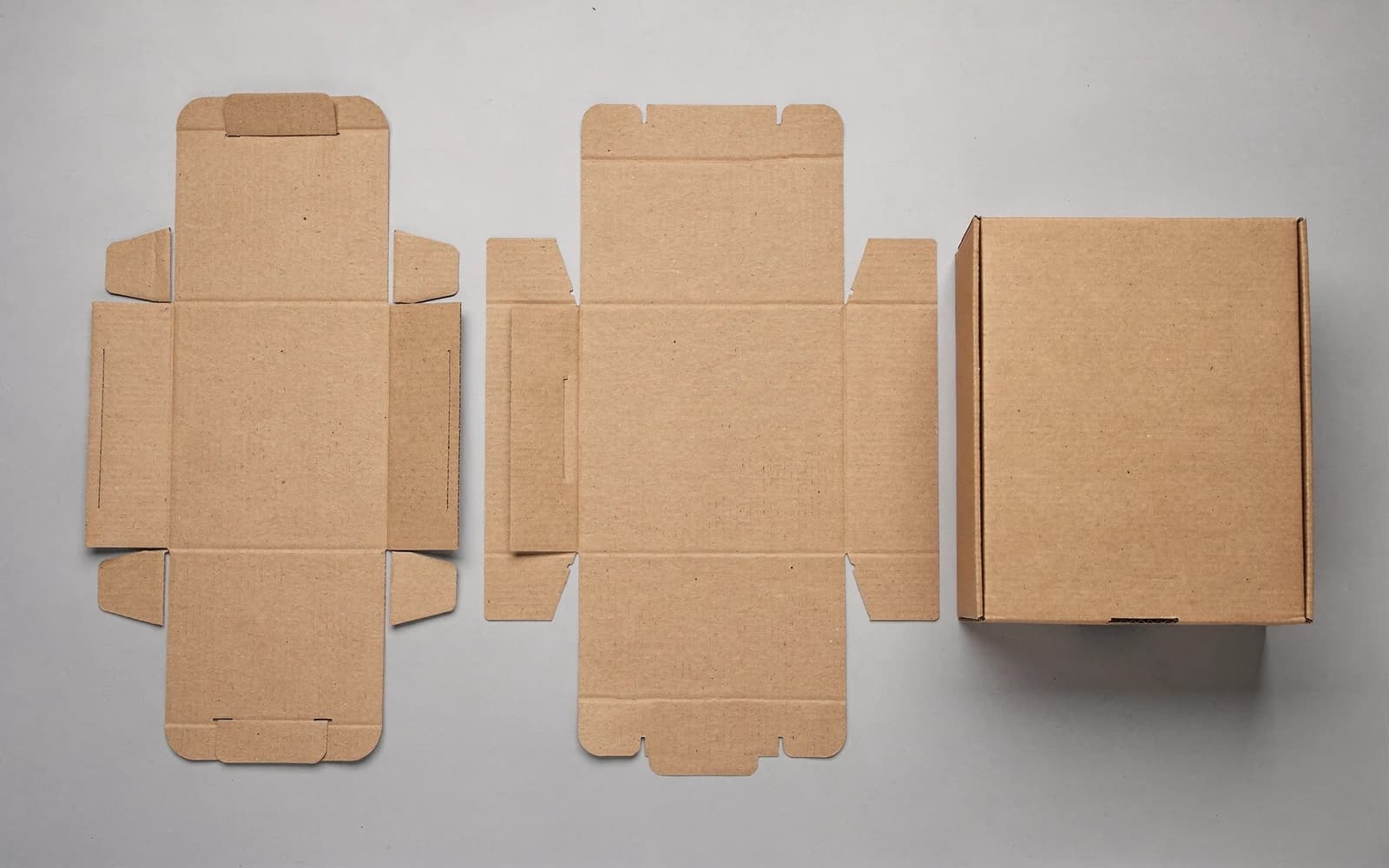
A steel-rule die is a plywood board with knife blades set into it, made for one design. It goes into a press, and every impression cuts that shape. A digital cutter has no die: the shape is a file, and a knife follows it.
Both cut the same blanks. Which one is cheaper depends on how many you need and how often the design changes.
What a die costs
Die makers quote per job, not from a price list: the price depends on the die type and size, the length of rule in it and how complex the shapes are (Custom Shape Pros).
One US die cutter publishes its numbers: “Our average die cost per job is about $250 with a typical yield of 8,000+ impressions depending on material,” and press time “about $80/hr” (Mag-Knight). Use them as an order of magnitude, not as your quote.
Two more costs sit around the die and rarely appear in the comparison: the die has to be stored between runs, and it has to be remade when the design changes — a new panel size, a new window, a new closure is a new die.
The arithmetic, on your numbers
For a run of one design:
- Die route: die cost + press time + setup. The die cost is fixed, so per piece it falls as the run grows.
- Digital route: cutting time per sheet. Nothing is fixed, so the per-piece cost stays flat whether you cut ten or ten thousand.
There is no universal break-even number, and anyone who gives you one is selling something. Take your own three figures — the die quote, your run length, and how many versions of the design you expect this year — and the answer is usually obvious. A $250 die over 20,000 boxes is a cent a box. The same die over 200 boxes is more than a dollar a box, before the press starts.
Where dies win
- Long runs of a stable design. Once the die exists, the press is fast, and a die is good for thousands of impressions.
- Repeat orders. The die is already paid for and sits on the shelf.
If your work is mostly this, buy dies. A digital cutter beside the press is still useful for samples, but it is not what runs your volume.
Where digital cutting wins
- Samples and prototypes. The first blank exists the moment the structural design does. No die to order, nothing to wait for.
- Short runs. Below the point where the die amortizes, the die is the whole cost of the job.
- Versions. Five sizes of the same carton are five dies, or one file edited five times.
- Late changes. A design change before the run is a file change, not a new tool.
- Print-registered work. A camera reads the printed marks and cuts to the print, so a printed sheet does not have to be positioned by hand.
What a knife table does besides cut
A die does one thing per impression: it cuts and creases what it was built for. A digital cutter changes tools:
| Job | Tool |
|---|---|
| Cut corrugated, board, foam | electric oscillating and drag knives |
| Crease corrugated and carton board | creasing wheel |
| Fold structures from foam board and sandwich board | V-cut tool |
| Tear strips and perforations | perforating tool |
| Tape the blank during the job | tape applicator |
| Kiss-cut stickers and film | kiss-cut tool |
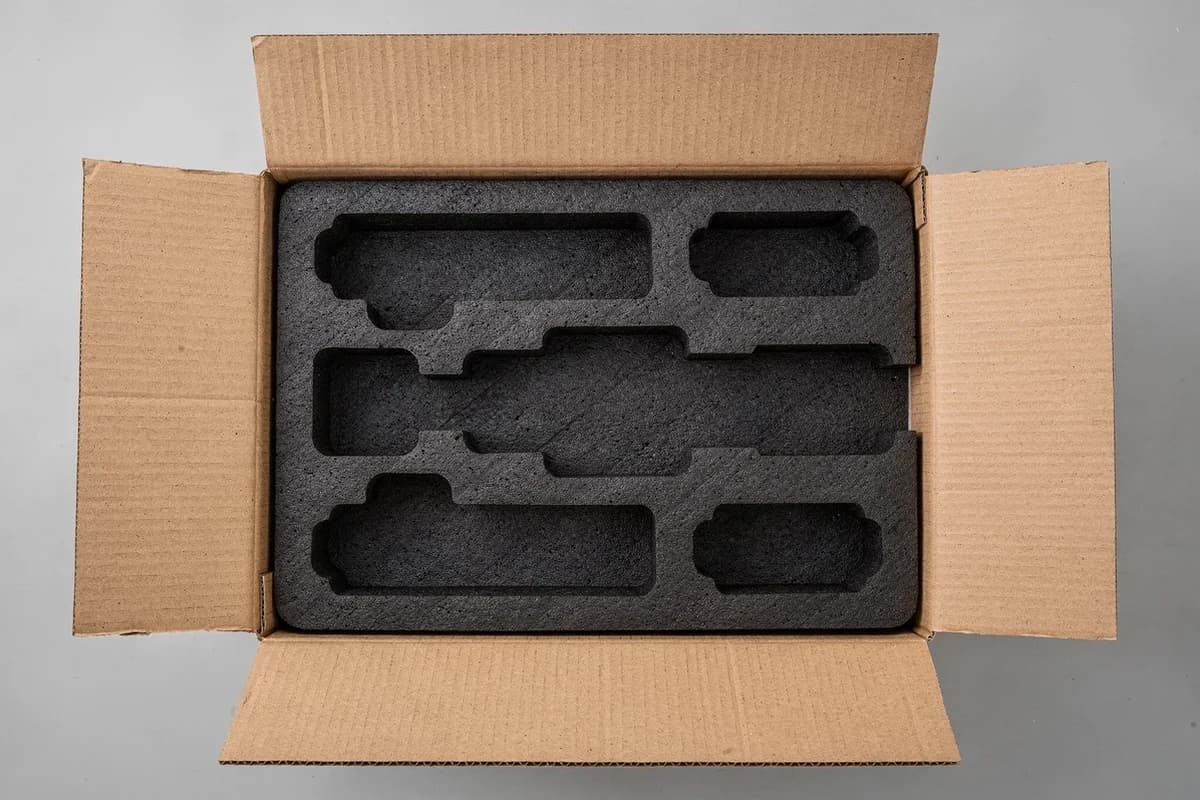
Our own tables cut up to 0.4 in (10 mm) on the S series and up to 1.4 in (35 mm) on the X3 and X7, which is what decides whether thick foam inserts are in range.
So which one
Short version: dies for volume, digital for everything that changes. Most packaging shops end up with both — the die press for the standing orders, the knife table for samples, versions and the short runs that used to be turned away.
If you want to see what the digital half looks like in practice — which machine takes your sheet size, which tools your materials need — that is the packaging applications page.