
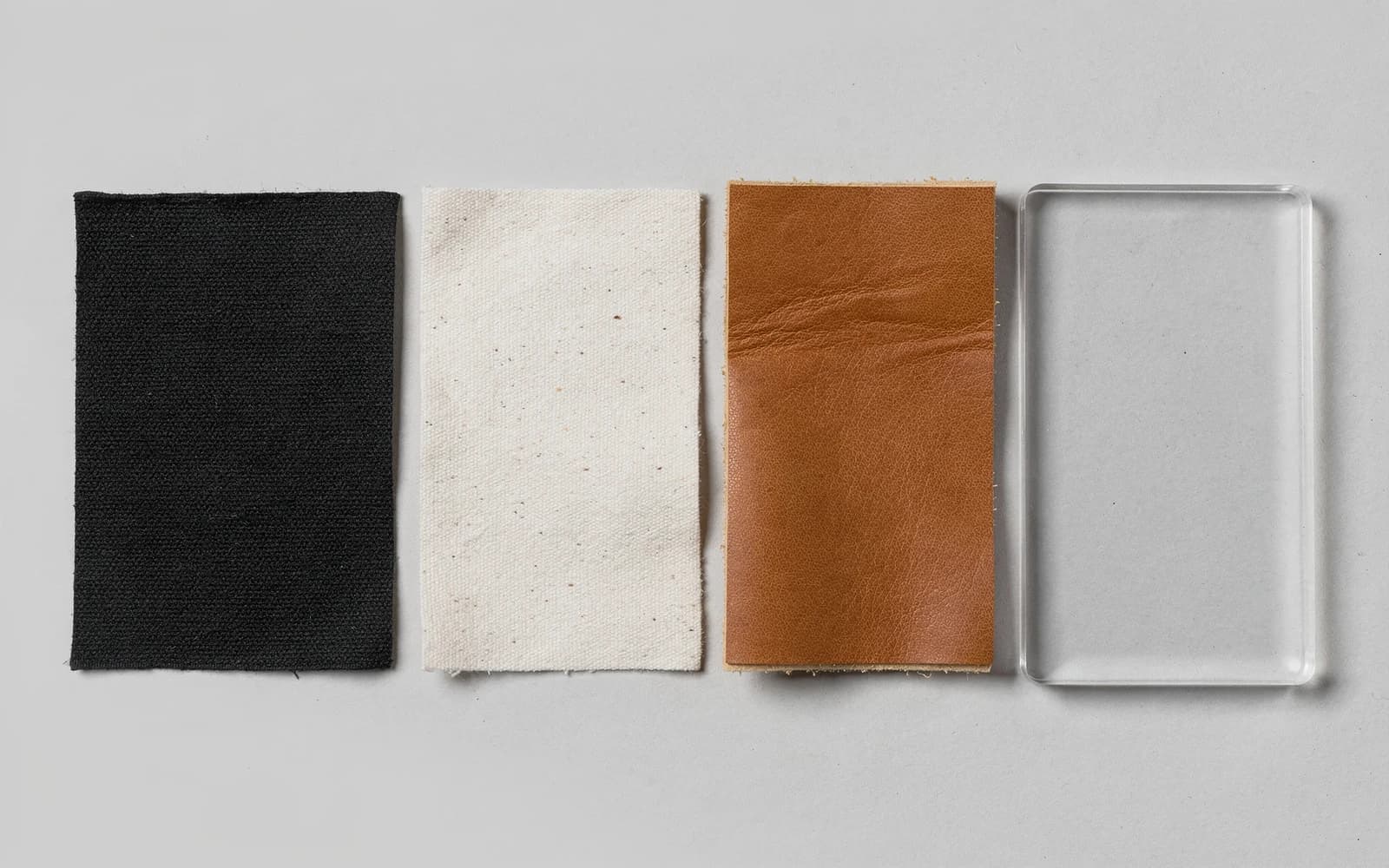
A laser cuts by burning through the material. A knife cuts by pushing a blade through it. Everything else in this comparison follows from that one difference: heat changes the edge, and a blade does not.
Neither is better across the board. Here is what each does, material by material.
Synthetic fabric: the laser has a real advantage
Cutting polyester, fleece and other synthetics with a laser melts the fibers together: “all individual fibers merge and become sealed from the plastic content of the textile,” so the edge does not fray and needs no hemming (Trotec).
A knife leaves a cut edge that behaves like scissors did: clean, but open. Where the part will be sewn or bound, that is what you want anyway. Where the edge stays raw and visible, the laser saves a finishing step.
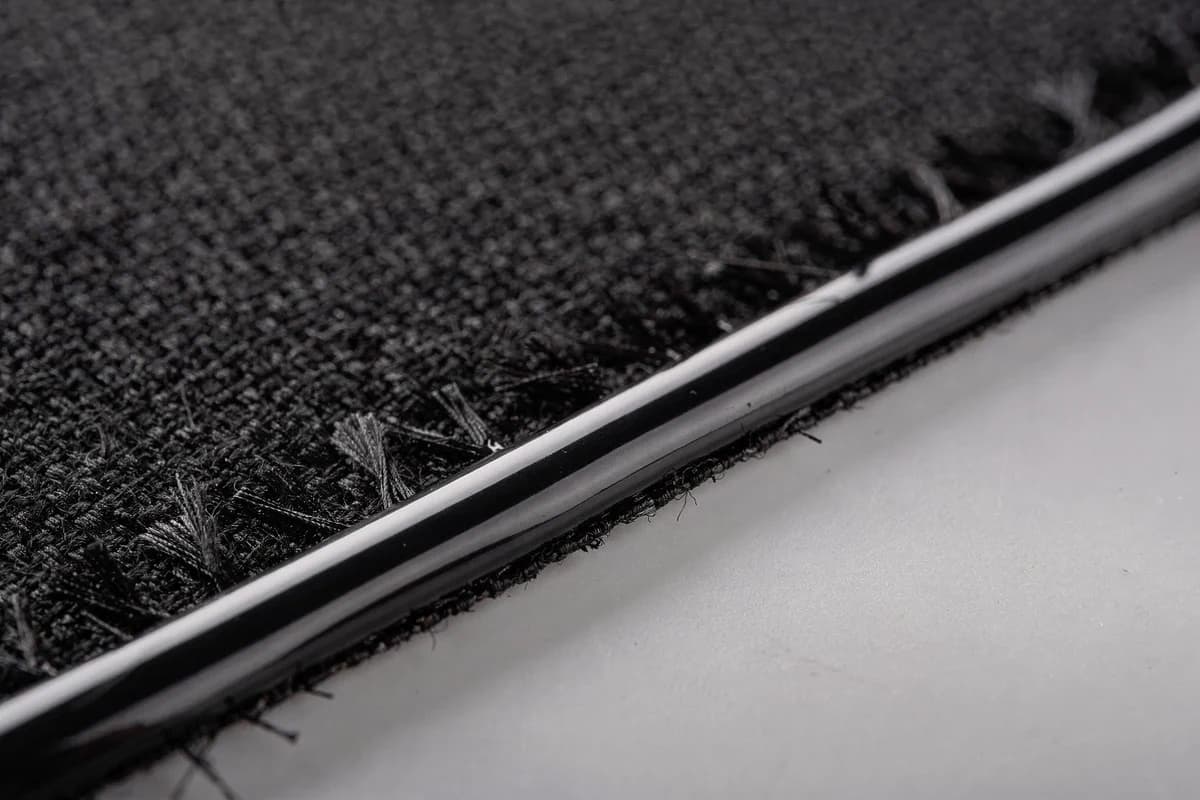
Natural fibers: the laser darkens the edge
On cotton and linen the same heat shows: the cut edge comes out brown, the way wood does (Trotec). For a technical part nobody sees, that is nothing. For upholstery panels in a light fabric, it is a defect. A knife leaves the fiber its own color.
Synthetic leather: the laser is out
This one is not a preference. Synthetic leathers often contain PVC, and Trotec is blunt about it: PVC is “extremely dangerous and not suitable for any type of laser processing,” releasing “hazardous chlorine gas and dust” (Trotec).
Upholstery and automotive work runs on PU and PVC-coated materials, so for that part of the shop the question does not arise: it is a knife.
Leather: it depends on the power, and on the fumes
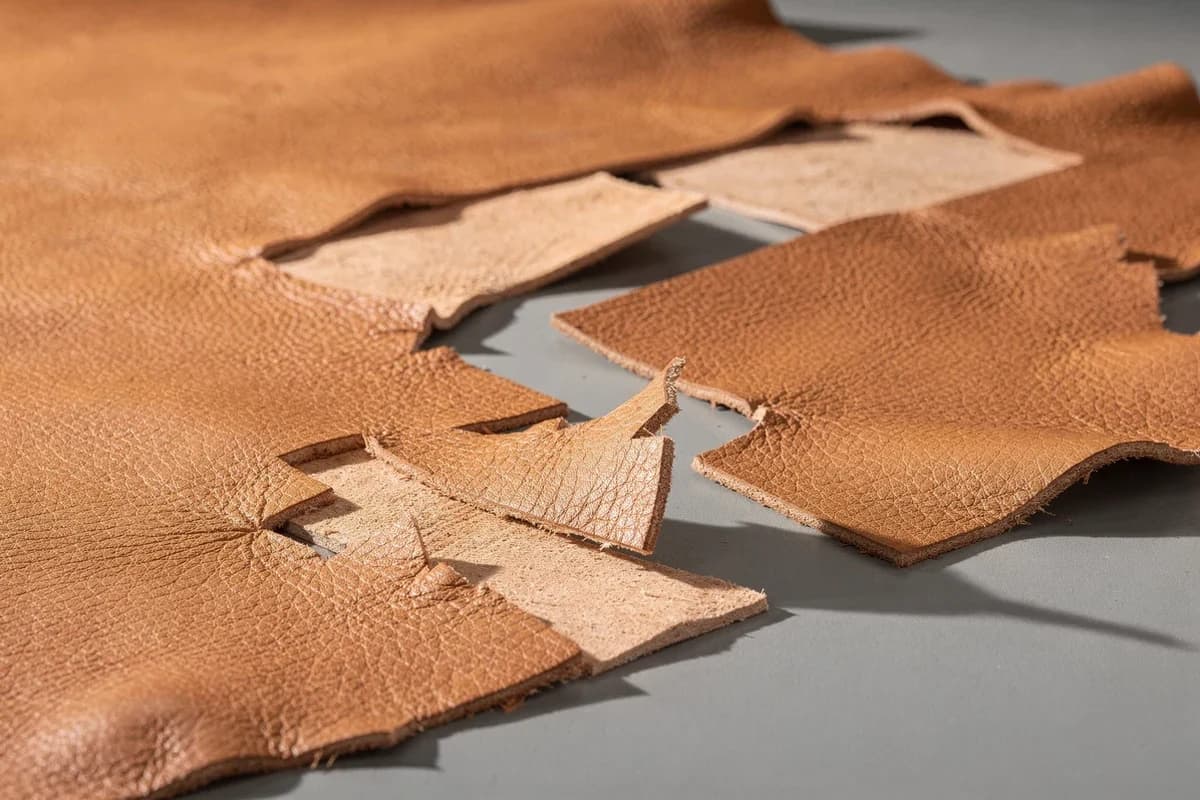
Laser-cut leather chars at the edge, and how much depends on the settings. In a 2023 study, cutting at 2.5 W left 72–82% carbonization along the edge; at 20 W, with a faster feed, it fell to 52–60% (Processes 11(10):2901).
Then there is the air. Laser processing needs extraction that brings airborne contaminants below the occupational limits — ANSI Z136.1 requires it for the laser classes these machines fall into, and OSHA recognizes that standard (ANSI Z136.1, OSHA Technical Manual). A knife table needs a vacuum pump to hold the material down, and that is the extent of its air handling.
An oscillating knife cuts leather cold: no charring, no smell, and a hide can be placed with the table’s top camera, which registers irregularly shaped material, or with the projector that shows the cutting pattern on the table.
Acrylic: the laser’s edge is hard to beat
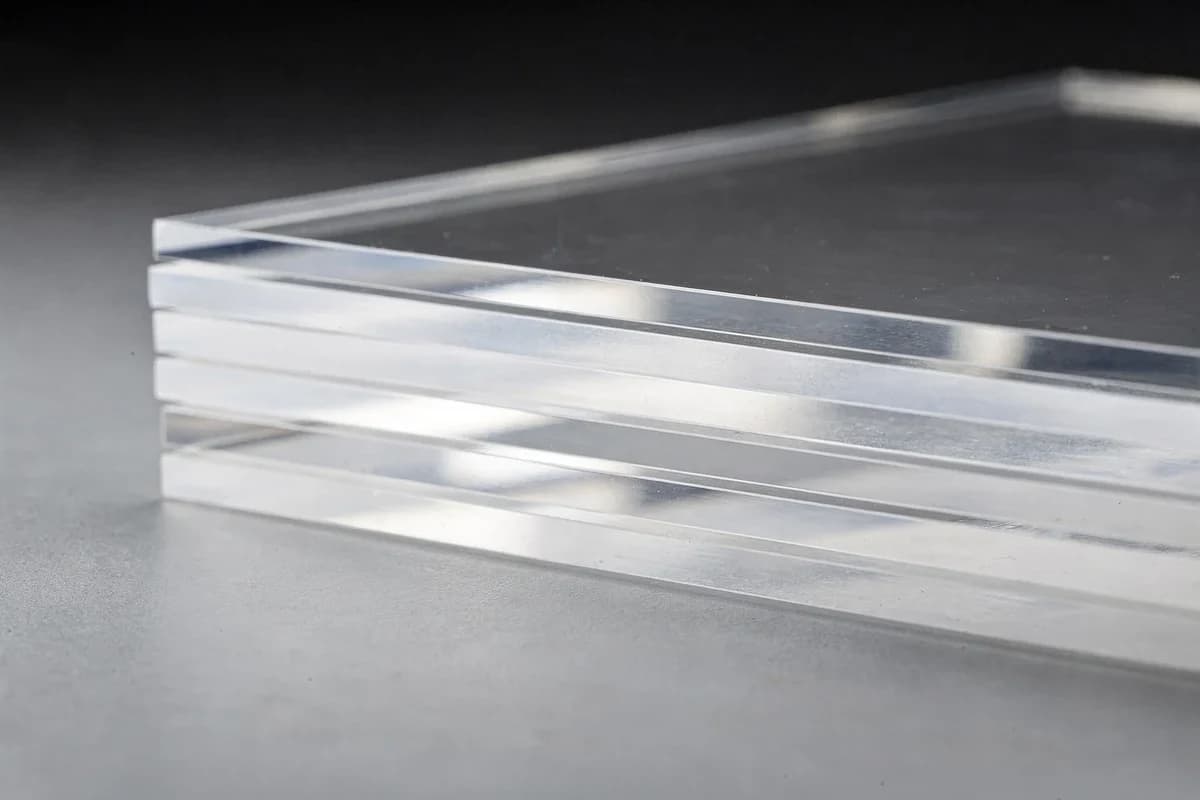
On acrylic the laser wins on looks: “Without any additional post processing, the laser cut creates a glossy, flame-polished cutting edge,” on sheet up to 30 mm, at roughly 10 W of laser power per 1 mm of material (Trotec).
A knife table cuts acrylic with a router module instead, and the edge is a machined one — matte, ready to flame-polish or leave as is. Our router modules name their limits: the 350 W module is rated for acrylic up to 5 mm, the 1000 W module for plastic, acrylic, MDF, chipboard, plywood and aluminum composite.
If the job is illuminated acrylic letters where the edge is the product, a laser is the right tool. If the acrylic is one material among ten on the same table, the router module keeps the job on one machine.
What the knife does that the laser cannot
- Thickness. Our X3 and X7 cut to 1.4 in (35 mm), the BULLMER X5 to 2 in (50 mm) — foam, rubber, gasket stock.
- Materials the laser must not touch. PVC and PVC-coated goods, as above.
- No heat-affected edge. Carbon and glass fabric, composites and technical textiles are cut with a driven rotary blade; nothing is melted or scorched.
- Marking in the same pass. A plotting pen draws assembly marks and part numbers on fabric, leather, rubber and Teflon.
- Creasing, V-cuts, kiss-cuts and perforation — tools a laser does not have.
Material by material
| Material | Laser | Knife |
|---|---|---|
| Polyester, fleece and other synthetics | sealed edge, no fraying | clean open edge; no heat |
| Cotton, linen | brown edge | fiber keeps its color |
| PU and PVC synthetic leather | not suitable — chlorine gas | the only option |
| Leather | charred edge, extraction required | cold cut, nesting around defects |
| Acrylic | flame-polished edge to 30 mm | router module; matte machined edge |
| Foam, rubber, gasket stock | — | to 1.4 in (35 mm), or 2 in (50 mm) on the X5 |
| Carbon and glass fabric, composites | heat-affected edge | rotary blade, no heat |
So which one
If your work is synthetic textile parts with raw edges, or acrylic where the polished edge is the product, a laser earns its place. If it is upholstery, PU and PVC materials, foam, composites, gaskets — or a mix of all of them on one table — it is a knife.
Which of our machines fits which of those jobs is on the application pages: furniture and upholstery, gaskets, composites and technical textiles, signs and displays.